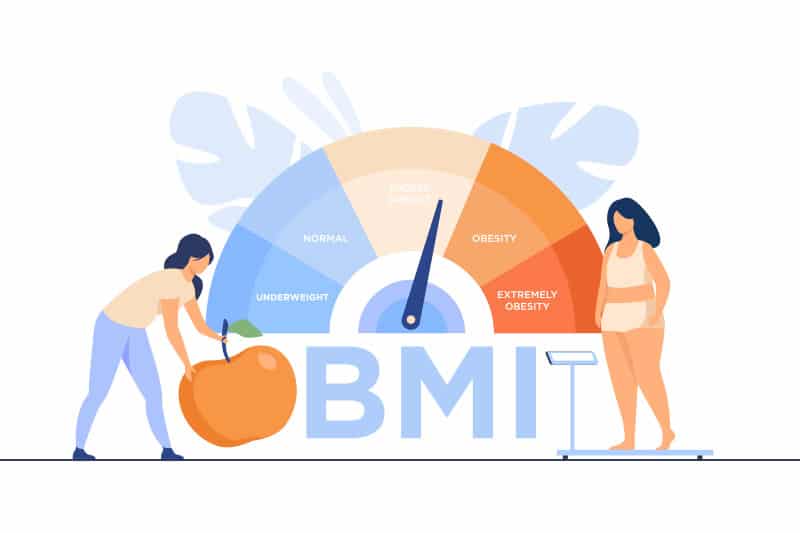
Of the health requirements you will have to clear, one will be your “body mass index” or BMI for surrogacy.
When a woman is carrying a child for other intended parents, there must be some reasonable assurance that the woman can go safely to term. Any other outcome is unacceptable at any level. The best chance a woman has to get to term in any pregnancy is if she is healthy.
It’s is important to understand two things about surrogate BMI requirements. First, they are subjective standards. In other words, there is no exact science that makes clear how much a woman’s BMI is going to affect her pregnancy.
Second, the BMI for surrogacy is going to vary from one region to the next, and one fertility clinic to the next. With that said, standards are usually within a pretty narrow range throughout the fertility community.
While acceptable BMI standards can differ, there seems to be some general consensus that a surrogate’s BMU should fall between 18.5, which is considered normal, and 33, which actually pushes the bounds of being overweight. Based on these numbers, only underweight and medically obese women would likely not be approved as prospective gestational surrogates.
At the end of the day, it will be each prospective surrogate’s fertility specialist that will decide what BMI is acceptable. They are the ones who have to make sure steps are taken to protect the health of the surrogate mother and the unborn baby. To be clear, some fertility specialists have a certain BMI range that they strongly prefer.
Not all existing and potential health problems are easy to diagnose. Sometimes, doctors will use things like a patient’s BMI to predict the possibility of certain health issues occurring. The last thing anyone wants to have happened is for a surrogate mother to get hit with a predictable health condition while they are going through the surrogate pregnancy.
The fact is BMI is a predictor of health conditions like high blood pressure, diabetes, and heart disease. The higher a woman’s BMI, the more likely they are to have or incur these kinds of health conditions. Clearly, any of these conditions could create an “at-risk” pregnancy.
A high BMI can also create surrogacy process issues like making it difficult for the surrogate to conceive, increasing the possibility of gestational diabetes, and putting stress on the unborn fetus.
What does a surrogate body look like? Truthfully, women’s bodies come in all shapes and sizes. BMI is not always a predictor of body shape. Of course, a woman’s height will also play a role in the shape of her body. If you have a marginally “plus size surrogate” body, it’s still possible you will fall within acceptable surrogate BMI guidelines.
So, yes, it is possible you can be a plus-size surrogate, but your BMI will very likely be the determining factor.
Above, we mentioned just a couple of the risks related to being an overweight surrogate. The fact is there are a lot of health risks tied to overweight women having babies. Here is a list of risks that most of us would consider dangerous:
Yes, this is just a partial list. That should make it clear why fertility doctors don’t want to approve women with too high or too low BMIs for surrogacy.
For future consideration, you can improve your BMI through nutrition and exercise. You should see your primary care physician for medical advice. If things were to improve, you could certainly try to qualify as a gestational surrogate in the future.